

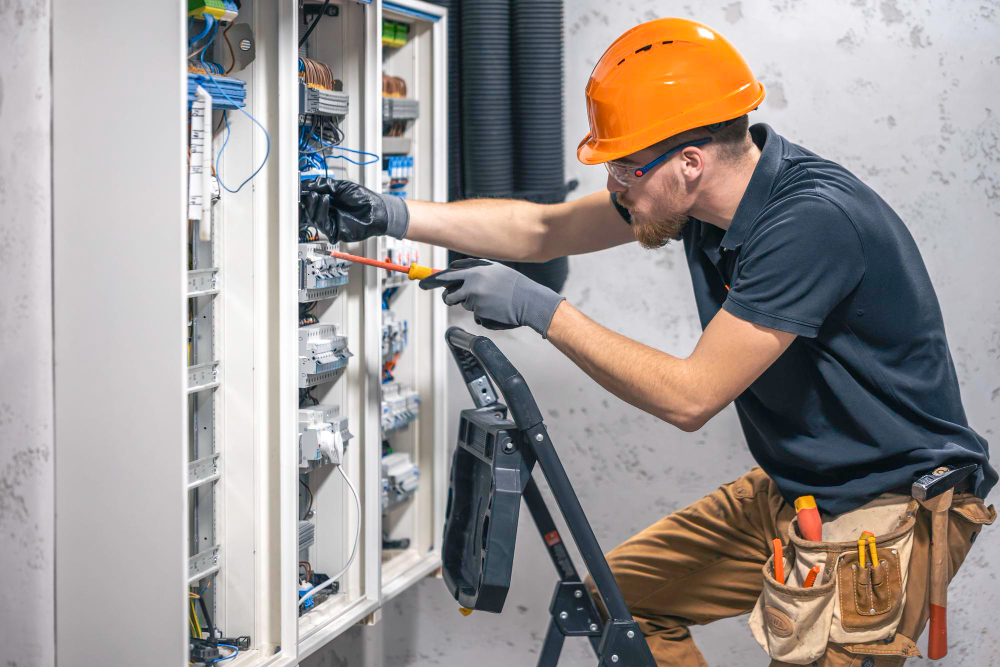
Large buildings rely on intricate electrical networks that operate behind walls, ceilings, and control panels. Offices, schools, hospitals, shopping centers, and entertainment venues depend on steady power for lighting, equipment, climate systems, security, and daily operations. When these systems fail, productivity drops and safety risks rise.
Many business owners often ask, “what do commercial electricians do?” in these situations. Their work goes far beyond simple wiring tasks, covering design, installation, inspection, repair, and management of complex electrical systems in busy public spaces.
What Do Commercial Electricians Do?
The question, what do commercial electricians do, often leads to confusion because many people associate electricians with residential repairs. Commercial electricians, however, work in business and public environments that have very different electrical demands.
They handle higher voltage systems, multi-phase wiring, large distribution boards, and complex layouts that power entire facilities. Their role involves reading technical plans, understanding building schematics, and working alongside contractors, engineers, and building managers to plan and execute electrical installations that match the needs of each property.
Their tasks commonly include:
- Installation of wiring, panels, and electrical components
- Troubleshooting electrical faults in large systems
- Conducting safety inspections to meet regulatory standards
- Repairing faulty equipment and circuits
- Designing electrical layouts for new commercial spaces
- Coordinating with teams during construction or renovation projects
Unlike residential electricians who often move from home to home solving isolated issues, commercial electricians adapt their work to environments that remain active and crowded during service.
Where Commercial Electricians Typically Work
Commercial electricians operate in places where people gather, work, shop, study, and receive services. Each site presents a different challenge because layouts, power demands, and safety expectations vary widely.
They frequently work in:
- Schools, colleges, and universities
- Office buildings and corporate spaces
- Hotels and leisure facilities
- Restaurants, cafés, and bars
- Shopping malls and retail shops
- Libraries, museums, and theatres
- Government buildings and public institutions
In these spaces, electrical work must happen with minimal disruption to daily activities. This requires planning, speed, and awareness of how businesses function.
Installation and Maintenance of Complex Systems
Commercial buildings contain far more equipment than homes. Lighting networks, climate control systems, security cameras, elevators, industrial kitchen equipment, data servers, and automated entry systems all rely on electricity.
Commercial electricians install and maintain these interconnected systems. They inspect wiring routes, distribution panels, circuit loads, and backup power systems to keep everything operating smoothly. Routine maintenance reduces the chance of sudden breakdowns that can interrupt business operations.
Safety Checks and Compliance
Commercial properties must meet strict safety codes. Faulty wiring or overloaded circuits in a public space can lead to severe consequences.
Commercial electricians perform detailed safety checks on electrical units and verify compliance with local regulations. They identify worn components, heat buildup, loose connections, and outdated panels before these issues escalate into hazards.
Advanced tools such as infrared thermal scanning allow them to detect hidden heat patterns that signal trouble inside panels and wiring systems.
Working with Construction and Renovation Projects
During new construction, commercial electricians collaborate with builders from the early stages. They plan where wiring routes will run, how panels will be placed, and how power will distribute across the building.
Renovation projects also require their expertise. When businesses reconfigure layouts or upgrade equipment, electrical systems must adapt. Commercial electricians redesign circuits and update installations to match new demands without compromising safety.
Energy Efficiency and Smart Electrical Systems
Modern commercial spaces aim to reduce energy costs and operate more efficiently. Commercial electricians work with smart lighting controls, energy monitoring systems, and automated load management tools.
Lighting upgrades from fluorescent systems to LED networks often form part of these improvements. Integrated controls allow businesses to automate schedules, reduce waste, and lower electricity usage.
They also work with building automation technologies that track energy patterns and help managers make informed decisions about consumption.
Preventative Maintenance and Reduced Downtime
Waiting for electrical failures can cost businesses significant time and money. Commercial electricians focus on preventative maintenance that keeps systems in good condition.
Regular inspections, equipment testing, and early detection of weak components prevent unexpected outages. This approach keeps operations stable and protects valuable equipment from damage.
The Role of Business Directory Services in Finding Electricians
Finding qualified professionals for commercial electrical work can feel overwhelming. This is where business directory services become valuable tools for business owners and property managers.
A well-organized directory allows users to compare electricians, read reviews, and evaluate experience before making contact. It also helps electricians boost search visibility so that businesses in need can find them easily.
Directories create a bridge between skilled electricians and commercial properties that require reliable service.
Discover Skilled Electricians Through See Near Me
At See Near Me, we connect businesses with verified professionals through our powerful business directory services. If you are searching for experienced electricians for commercial properties, our platform helps you find trusted experts in your area.
Join See Near Me to boost your search visibility, explore local professionals, and discover reliable services that match your exact needs.
FAQs
What do commercial electricians do?
They install, maintain, and repair electrical systems in commercial buildings such as offices, schools, and retail spaces.
How is a commercial electrician different from a residential electrician?
Commercial electricians handle larger, more complex electrical systems with higher voltage and stricter safety requirements.
Why are commercial electricians important?
They ensure safety, prevent downtime, and maintain reliable electrical systems in business environments.
Do commercial electricians work on maintenance as well?
Yes, they perform regular inspections, repairs, and preventative maintenance to keep systems running efficiently.


